
From Two-Day Installs to Five-Minute Agents: Fixing Onboarding
An OpenClaw install that looks like a 30-minute job runs to two days, and the time goes to configuration uncertainty rather than to typing commands.
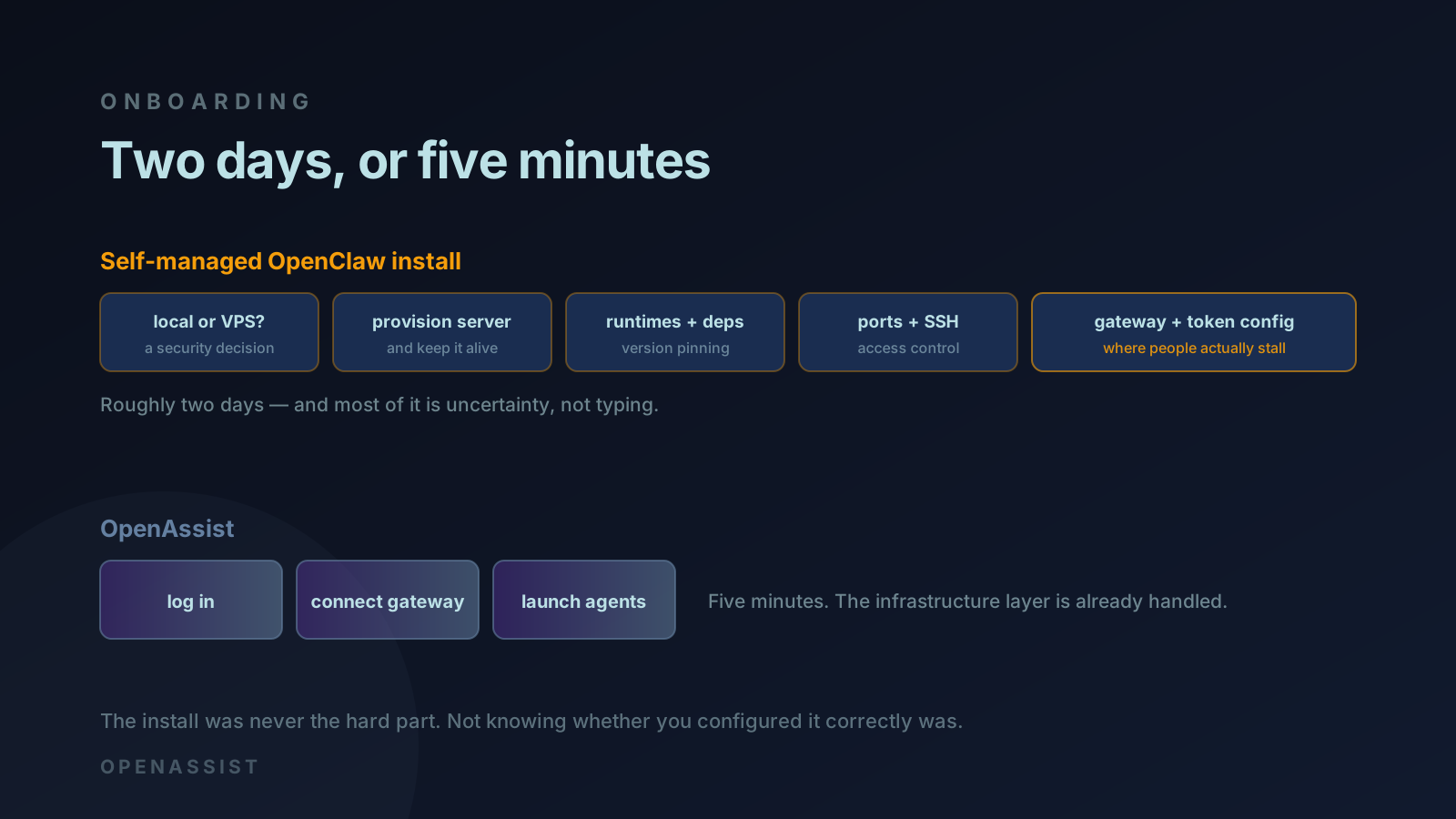
An OpenClaw install that looks like a 30-minute job routinely turns into a two-day one. The software is not the problem. The onboarding path assumes you are an engineer who enjoys infrastructure work, and most people reaching for agents today are not.
They are founders, operators, marketers and builders who want leverage — agents running workflows and cutting manual work. Not a second career in DevOps. What they get instead is a stack of infrastructure decisions before a single agent does anything useful.
Why does a 30-minute install turn into two days?
Because almost none of the elapsed time is spent typing commands. It is spent deciding, verifying and second-guessing. The first friction point arrives before installation starts: where should this run at all?
Run OpenClaw locally and it is convenient, but agents hold tool access, API keys and execution permissions. A misconfiguration puts sensitive data and system access at risk on the machine you also use for everything else. Anyone thinking past the first week takes that seriously.
Is a VPS the easy answer instead?
It removes the local-security problem and replaces it with operational weight. A VPS install is not conceptually hard — it is just a lot of separate things that all have to be right: provisioning the server, configuring runtimes, installing dependencies, securing ports, managing SSH access, and keeping background processes stable across restarts.
None of those is difficult in isolation. Together they turn launching software into maintaining infrastructure, and that is before any agent is running.
Where do most people actually get stuck?
Configuration, not installation. Once OpenClaw is running you face a series of choices that are hard to evaluate without having already made them once: gateway routing, heartbeat intervals, token management, logging verbosity, tool execution permissions.
These are not cosmetic toggles. Each one moves cost, performance or security:
- Set the heartbeat interval wrong and you burn tokens around the clock, quietly.
- Route traffic inefficiently and spend rises with no obvious signal that it has.
- Open tool permissions too broadly and you have created real security exposure.
This is the hidden onboarding tax — not the install, but the uncertainty afterwards. Unless you have read the docs, the GitHub issues and the community threads, you are guessing, and you cannot tell whether your environment is efficient or silently leaking.
The install was never the hard part. Not knowing whether you configured it correctly was.
Why does this gap matter?
Because agents feel instant and deploying them does not. Demos show tasks automated and decisions made in seconds; getting to the point where that is true for you takes days. That distance between agent potential and agent accessibility is where most non-technical adoption stalls.
The people who gain most from agents are operators and builders, and they are precisely the people with no appetite for maintaining an infrastructure stack. They want outcomes, not orchestration.
What does OpenAssist change?
It removes the infrastructure layer rather than replacing OpenClaw. OpenClaw arrives preinstalled, secured and configured on a dedicated droplet, so there is no server to provision, no runtime to install and no gateway routing to guess at. You log in, connect your gateway, and launch.
The operational difference is the whole point. Instead of spending the first two days installing and configuring, you spend the first five minutes putting agents into real workflows — and that compression changes behaviour, not just timing. When deployment is heavy you hesitate before trying something. When it is instant, you explore.
The cost of a slow setup is not the setup. It is every experiment you decided wasn't worth the effort of standing up.
Does a managed platform mean losing control?
It usually does, and that is the trade OpenAssist declines to make. Many managed AI platforms solve onboarding by abstracting everything away: you lose visibility into configs, routing and execution, and end up with a black box that is convenient right up until you need to understand it.
OpenAssist is opinionated rather than closed. Environments arrive pre-configured and optimised, but you can still see how gateways route, how tokens are managed and how agents are configured — guardrails rather than a locked room. You are guided toward a stable, cost-efficient setup without being held there.
How is security handled?
Environments are isolated and hardened by default, which was one of the main reasons the platform exists. Running agents on your own machine means real exposure: keys, file access permissions and background execution all sit next to your personal data. Even experienced users hesitate when agents run that close to company systems.
On OpenAssist, authentication is managed, execution scopes are controlled, and sensitive configuration stays inside protected runtimes. You keep what agents can do without putting your own machine in scope.
Why do pre-baked configurations matter so much?
Because starting from optimised defaults is the single most underrated onboarding accelerator. Most people have no wish to become experts in heartbeat tuning or token routing efficiency; they want an environment that works and does not waste money.
Shipping with pre-baked configuration means the baseline is already tuned for performance and cost control, which removes the specific anxiety of a self-configured environment — the nagging question of whether tokens are leaking or agents are over-polling while you are not looking.
What should deploying an agent feel like?
Like launching software, not provisioning infrastructure. You do not configure runtimes to use Slack or install dependencies to open Notion — the tool is ready when you log in. Agents should work the same way: operational tools rather than technical projects.
When that shift happens, adoption accelerates. Teams experiment more, founders deploy internal operators faster, and agencies automate workflows without hiring an infrastructure specialist first.
OpenClaw is powerful on its own, but power without accessibility slows real adoption. The future of agents will be defined less by what they can do than by how quickly people can put them to work — and that starts when launching one takes five minutes instead of two days.
Skip the two days
A dedicated, hardened OpenClaw droplet with gateway routing and token limits already configured.
Launch your agentKeep reading